

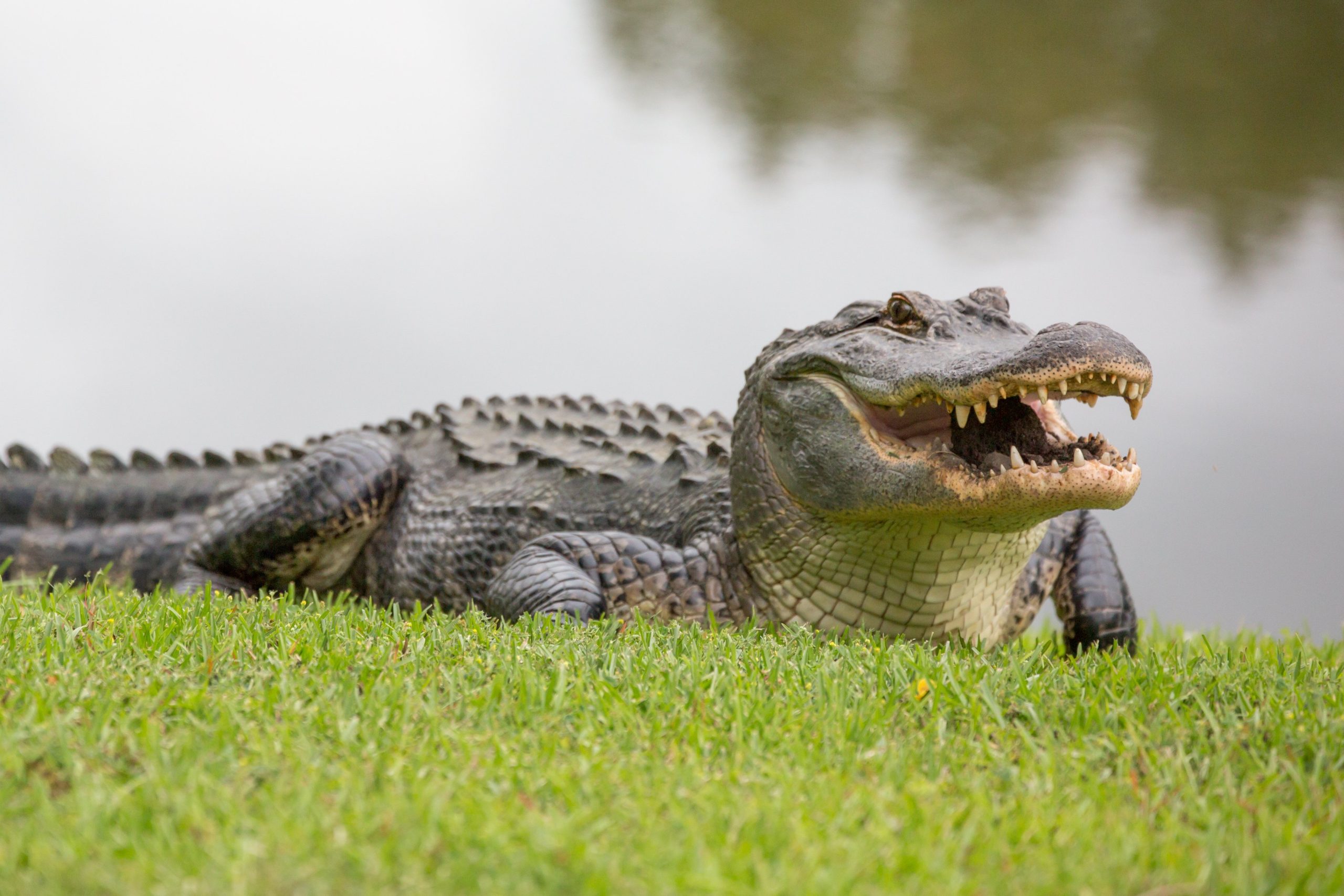
It’s Gator Season!
Only in Louisiana could the conversation of alligator hunting come up in a funeral home. But there I was, amidst 50 other conversations, hearing about bait and tags, the best meat on an alligator and how to cook it tender. It is hunting season for alligator after all – and the best time to buy it fresh.
Alligator hunting in Louisiana is divided into two zones: east and west. The east zone opens the last Wednesday of August; the west zone opens the first Wednesday in September. Each zone remains open for 60 days.
Thirty five years ago, when the reptiles were an endangered species, there would have been far less excitement about hunting gators. But since the state’s conservation and management practices and with the number of alligator farms operating and releasing gators into the wild, there is currently overpopulation. At last count, the wild alligator population in Louisiana has grown from less than 100,000 to more than 2 million over the past 50 years.
Consequently, fishermen say the selling price of gators has dropped terribly. As one fisherman reports, “It used to be $20 to almost $30 a foot, and now the same gator is going for $10 a foot. There is more money to be made guiding tourists than commercially hunting alligators.”
Still, they remain Louisiana’s greatest renewable resource. The LSU AgCenter reported that in 2019 commercial wild alligator hunting brought nearly $3.5 million for their meat, hides and oils, which are used in certain chemicals. Researchers have even found that wild alligator blood has both antibiotic and antiviral properties.
Alligator Facts
- Their average lifespan in the wild is 50 years.
- Over that time, they can regrow about 3,000 teeth.
- Alligators cannot survive in salt water. Those in Louisiana live in coastal marshy areas, swamps, rivers, bayous and lakes.
- While an alligator’s can shut like a bear trap, the muscles that open their jaw are weak. An adult human can hold an alligator’s jaw shut bare-handed.
- On land, the reptiles can run up to 35 mph for a short time, but can lunge in the water up to 30 mph.
- Mating season is April and May, and the temperature of the incubating eggs determines the sex of the offspring. Alligator farmers have come to know that if the eggs are cooler than 86 degrees, they will produce all females, while anything above 93 degrees will result in all males. On average, there are about five times more females produced than males.
- When they mate or want to scare off predators, male and female gators give off a roar that has been recorded as loud as a lawn mower.
- During the winter they go through a dormant stage, where they live in tunnels, up to 65-feet long, that they dig in the mud.
- Their diet consists mainly of fish, turtles, birds and mammals. Most recently, it’s been discovered that alligators also eat certain vegetables, legumes, seeds and fruits, including elderberry, citrus and wild grapes.
Nutrition
Maybe their diet is what makes their meat low in fat and cholesterol and high in protein. A 3.2-ounce serving is only 232 calories with 4g of total fat and a whopping 46g of protein.
The tail meat is the filet mignon of the alligator, with its white meat is similar in flavor to veal. The ribs and wings are a dark meat comparable to the taste of pork shoulder. Hunters argue on the best way to cook it, be it in a sauce piquant, grilled or fried. But all agree, it’s good eats!
No idea how much to buy? Here’s a tip: When purchasing nuggets, you want 1/4 to 1/3 pound per serving.
Alligator Bites
- 1 Tbs. hot sauce
- 1 Tbs. minced garlic
- 1 Tbs. Better than Bouillon Roasted Chicken Base (just the base, don’t add water)
- 1 Tbs. onion powder
- Salt and pepper to taste
- 1 lb. alligator tail cut into ½ pieces
- 1 Tbs. olive oil
- 1 pkg. Cajun breading/batter mix
- 2 large eggs, beaten and mixed with 1 Tbs. water
- 2 cups vegetable oil
Add the hot sauce, olive oil, garlic, roasted chicken base and onion powder to a small bowl and mix together. Add the alligator tail pieces and toss to coat. Set aside.
Pour the oil in a medium-size saucepot and heat to 375 degrees.
Add the breading/batter mix to a shallow bowl. Add the eggs and water to a separate shallow bowl.
Add the alligator tails to the egg mixture and toss to coat. Dredge each piece in the breading/batter mix and add to the oil. Fry for 1-2 minutes or until golden. Remove the fried alligator to a plate lined with paper towels. Serve immediately. NOTE: Try it with Ranch dressing.
Recent Comments