

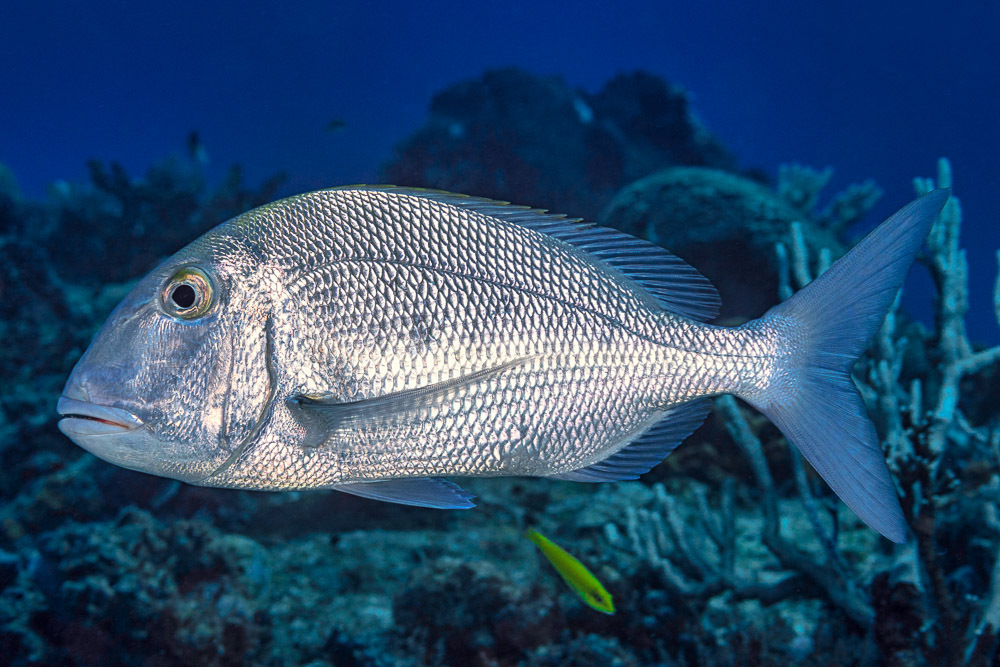
In conversations amongst local fishermen, you usually don’t hear, “Are the porgy biting?” You’ll hear reports on catches of snapper, redfish, flounder or bass – but not porgy! However, a growing number of anglers – and chefs – know a quality fish when they get one, as they’ve discovered that this under-loved fish is readily available and quite tasty.
Just don’t judge them by their looks. With bulging eyes, banded stripes that run across their bodies, long angular foreheads and disproportionately small mouths, they look animated.
Their powerful jaws and heavy teeth easily crush their favorite hard-shelled foods like crabs, snails and sea urchins. But they also feed on worms and small fishes. They tend to feed in schools and migrate looking for food.
Known as scup or sea bream in some parts, porgies are commonly referred to as white snapper along the Gulf Coast, even though they are not true snappers.
In Louisiana, they are found in waters 150 to 300 feet deep where they hang out on rocky ledges and reef-like habitats. These slow swimmers are easy to catch.
They are also one of the slowest-growing reef fish, with the biggest growth spurt in the first four to five years of life, averaging 3.3 inches annually. They also reach sexual maturity by that time. Then from 6 to 10 years old, they average only a half-inch per year. After age 10, their growth rate slows even more.
Porgies, and similar underappreciated fish, are so much on the radar of chefs for their taste and sustainability that one of New Orleans’s newest seafood markets is named Porgy’s, in an effort to increase awareness of the fish and other lesser-known, lesser-coveted Gulf-caught fish.
Nutritional Value
Porgy is good eats for reasons other than its taste. The fish packs high amounts of niacin, phosphorus, vitamins B6 and B12 and selenium. It’s a lean fish low in sodium and a great source of low-fat protein. It makes up for the fact that it’s low in Omega3 by being one of the few fish with the lowest levels of mercury. Add to these benefits the fact that there are only 214 calories in one medium steamed or poached porgy and you can understand their popularity.
With a large white, firm flaky meat and a sweet, subtle flavor, porgies are said to taste just like snapper. Cooked properly, they are delicious!
Less oily than many other seafoods, they bake to a deliciously crispy finish in just about 20 minutes at 400 degrees. That includes the crunchy skin which can be eaten. Interestingly, this fish belongs to the class of saltwater fish with no risk for parasitic infection, making them ideal for sushi and ceviche. Whether enjoying them grilled, en papillote, baked or pan-fried (they make a great fish and chips) or even in poké, the world is your porgy!
Grilled Porgy
Oil the grates of your pit or gas grill before lighting.
Cut a slit on one side of the whole fish. Pat fish dry inside and out. Brush both sides with a tablespoon of olive oil and season with salt and seasoning (inside too.) Stuff a couple of lemon slices about 1/4 “thick, a spring of rosemary and a couple sprigs of fresh oregano and thyme. Close the fish; you can tie it with kitchen twine.
In a medium bowl, toss a bunch of scallions with a pinch of salt, 2 -3 tablespoons olive oil and a squeeze of fresh lemon. Place the bunch of scallions (green tops and all) on the grill, then place the fish on top.
Cover the grill and cook, turning once, for 9-10 minutes or until the skin releases naturally from the grate. Test for doneness by slipping a paring knife into the center of the fish; it should feel hot when carefully touched to your lower lip or the inside of your wrist.
Recent Comments