

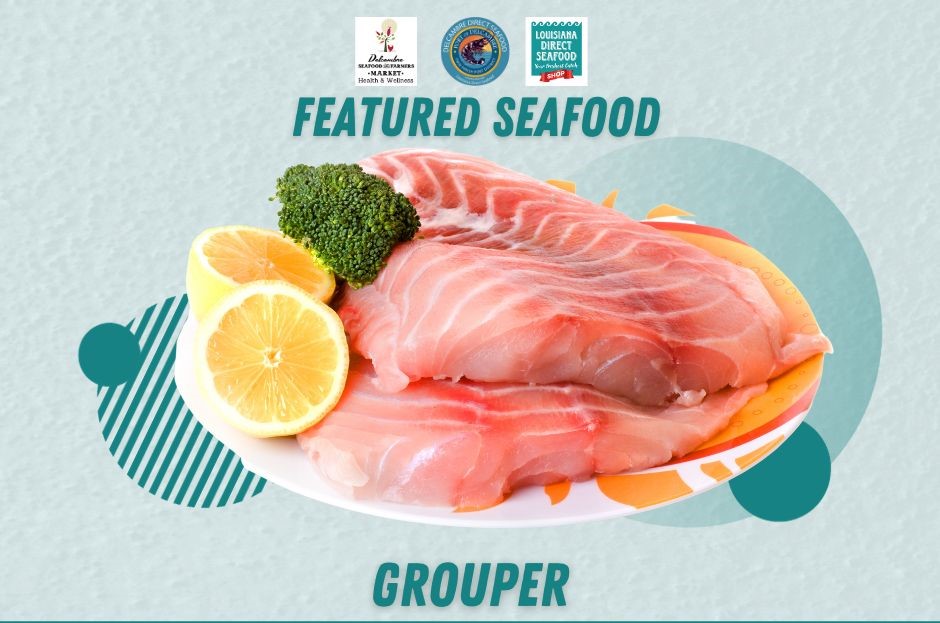
This month’s featured seafood, the red grouper, is a fish that has been the center of a heated debate, over the last two years, between commercial and recreational fishermen, both wanting their share of this desirable fish.
Among the more than 400 different species of grouper in the sea, the red group is in the top three of Florida favorites. Mostclosely related to the Nassau grouper, this fish makes for a stunning catch photo.As the name implies, their head and body have a dark reddish tint with shades of pink or red below, occasional white dappling on the sides and black spots on the cheeks.
Their large mouth and projected lower jaw allow them to literally inhale their food whole, including a diet of octopus, shrimp, lobsters and a variety of fish. Nicknamed the “trash can” by anglers, they will eat any bait put in front of them – but once they do, hold on tight. Despite its small size, between 1 and 2 feet, it can be fairly aggressive.
Interestingly, all red grouper begin life as females and sexually mature when they reach 4 to 6 years of age.
Habitat:
They are commonly found in waters 10 to 60 feet deep- although can be found deeper – hiding in crevices and cavers of rocky limestone reefs, and also near sponges and coral areas. Juveniles prefer grass beds and rock formations in shallow waters near the shores, moving offshore as they mature.
The red grouper offered by Delcambre Direct Seafood is supplied by Lance Nacio, owner of Anna Marie Seafood, and caught off the west coast of Florida in a depth of about 100 feet.
They play an important role in their ecosystem, excavating flat-bottom areas creating habitat for themselves and other commercially important species, such as black grouper and Vermilion snapper.
Nutrition:
If you’re watching your calories, red grouper is a good choice; a 3-ounce raw serving contains 100 calories. PLUS, it’s a good source of vitamins B6 and B12, phosphorus, potassium, protein and selenium – and it contains no carbs. The only caution to take in eating red grouper is that it is quite rich in cholesterol, so adults with cardiovascular problems should limit their intake to 200 mg per day.
Taste:
This fish is sweeter and milder than black grouper, and many consider it tastier, often comparing it to seabass and halibut.
Cooks like that the white, chunky flakes remain intake whether grilled, pan-seared, baked or broiled. Because it’s a lean fish, some basting is recommended while broiling or baking it, to keep the flesh moist. Their heads are sought by many for the rich stock base they render.
Pan-Seared Grouper
From Champagne Tastes
Ingredients
- 8 oz. grouper (2 filets)
- 1 tbs. flour (Use gluten-free, if desired)
- Pinch salt, pepper
- 1 tbs. olive oil
- 2 tbs. butter, divided
- 1 lemon, juiced
- 1 tbs. capers
- Small handful fresh herbs (such as fresh rosemary, chives, or oregano)
Instructions
Pat grouper fillets dry. Dust with flour, and shake off any excess. Sprinkle them on both sides with salt and pepper. Prepare a heavy pan with the olive oil and 1 tbs. butter. Heat on medium-high until butter is melted but not browned, then turn the heat down to medium. Place the fillets in the pan and cook about 3-4 minutes. Don’t touch the fillets until they’re ready to flip. Use a thin metal spatula to test the fish. When you can slide the spatula under the fish without the fish sticking to the pan, it’s ready to flip. If the fillets won’t release, give them another 30 seconds. They’ll release when they’ve finished cooking. After flipping, divide the remaining 1 tbs. butter over both fillets. Cook fish another 3-4 minutes until done. Fish will be golden on both the top and bottom and opaque all the way through when finished cooking. Transfer the fish to plates, leaving the excess butter in the pan. Cover fish to keep warm, or set fish in a 200ºF oven. Reduce heat to medium. Add the lemon juice and capers, and stir with a wooden spoon. Add half the herbs and stir again. Serve fish hot with pan sauce and remaining herbs.
Recent Comments