
The Biggest Precaution
Avoid sunburns – According to the Skin Cancer Foundation, having five or more sunburns doubles your risk for melanoma. Even one blistering sunburn in childhood more than doubles your chances of developing melanoma later in life.
Keep in mind that UV rays are strongest from 10 am to 4 pm. Of course, you can’t avoid these times when on vacation, so take the following safeguards:
Sunscreens – the 411
Make sure to use a sunscreen that is labeled broad-spectrum, which mean that it blocks both UVA and UVB rays. An SPF 15 blocks about 94 percent of rays, SPF 30 blocks 97 percent, and SPF 50 blocks about 98 percent. Most dermatologist recommend at SPF of 30.
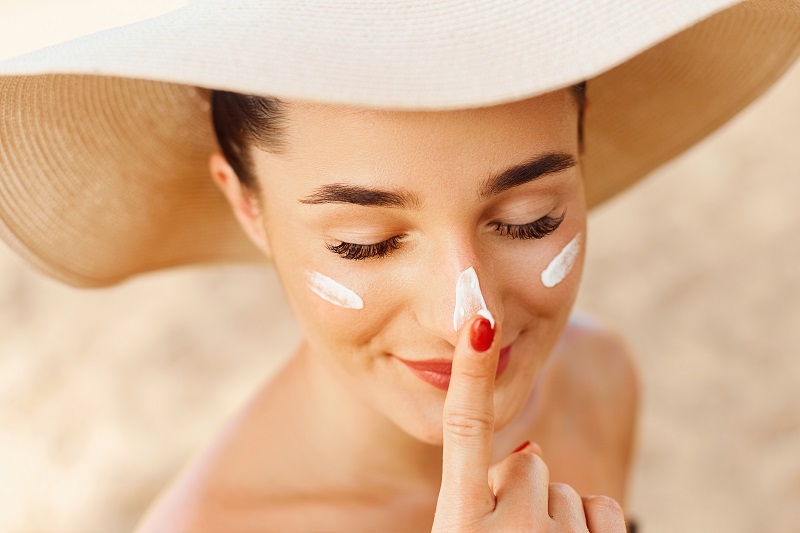
You need more sunscreen than you think. Adults should use a shot-glass-size glob to cover the body (more if you’re generously proportioned or tall) The body includes the backs of your hands, fingers and feet. The tops of your feet haven’t seen sunshine all winter long. Additionally, apply a teaspoon amount for the face, neck, ears and upper chest. Do all of this about 15 minutes before going outside so that it can soak in.
The biggest mistake people make is thinking one application is enough – it’s not. Any SPF product applied at 8 a.m. (even a real sunscreen) isn’t providing protection by lunchtime, if you’re in the sun. You should reapply every two hours.
When using spray sunscreen, never spray your face, to avoid lung irritation. Instead, mist your palms and blend that over your face and ears (avoid the eyes and mouth). When you’ve finished, your skin should be shiny – and you’ll still need to reapply every two hours. Note that aerosol sunscreens are flammable – so stay away from the barbeque pit!
If you’re using a sunscreen from last year, be sure to check the expiration date, usually at the bottom of the container.
Sunscreens made for babies and kids are fine for adults, but sunscreens made for adults should not be used on young children.
Everyone should wear a lip balm with an SPF 30 and reapply it throughout the day. Try Sun Bum Watermelon Lip Balm SPF 30 ($4), O’Keefe’s Lip Repair with SPF 35 Stick ($4), or Banana Boat Sunscreen Lip Balm SPF 45, Aloe Vera & Vitamin E ($3).
In a car, the glass protects against a burn but not against the harmful UVA rays (It’s why many people, particularly truckers, have been found to have basal carcinomas on the left side of their face.)
Don’t rely on just an umbrella to protect you from the sun’s damage. UVA and UVB can penetrate through the fabric.
You can still get sun damage on cloudy days. UV rays bounce off clouds and then are redirected, creating a combination of refraction and reflection that could result in even higher UV levels.
Cover Up
Sunscreen alone isn’t enough. Choose brighter or darker colors that absorb UV rays better and thicker woven fabrics or synthetics in a loose, relaxed fit. Thinner, tighter and lighter clothing, has less sun-screening ability. A white t-shirt only has an SPF 5.
Baseball hats won’t protect your face nearly as effectively as a wide-brim hat.
Foods
Red and orange foods, like tomatoes and orange peppers, contain the antioxidants lycopene and beta-carotene, respectively, that offer natural protection from the sun, and may help repair cells after sun damage,
Get a Yearly Exam
See a dermatologist once a year. In between appointments take photos of any suspicious spots to show your doctor. Have your partner check your back. If you’re alone, check your back with a mirror, as best you can.
Look for: rough patches that crust, bleed or ooze; a mole or spot that changes in size, shape or color.
Recent Comments